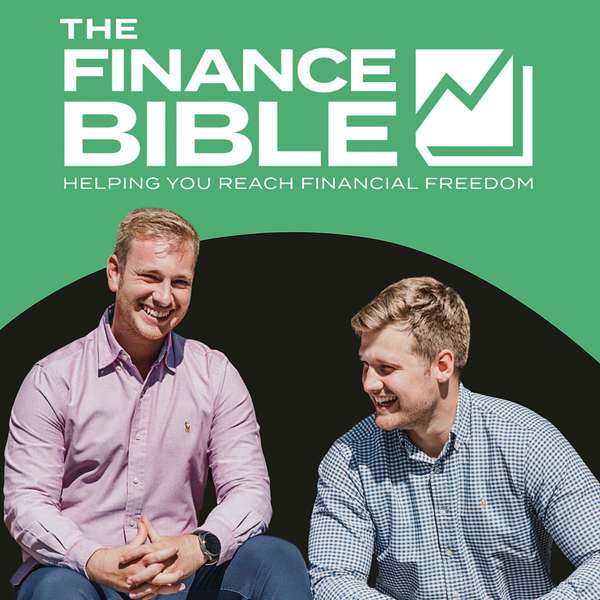
The Finance Bible
The Finance Bible podcast is your ultimate resource for financial freedom, personal growth, and business success. Hosted by Zeke Guenthroth and Oscar Don, this podcast is designed to help you achieve your goals through actionable insights, expert advice, and practical strategies.
Each week, we bring you fresh episodes packed with valuable tips on a wide range of topics, including investing, property investment, saving, budgeting, shares, cryptocurrency, inflation, interest rates, wealth building, and debt management. But that’s not all—we also dive deep into personal growth strategies and business success tips, helping you develop the mindset and skills needed to thrive in every area of your life.
Whether you’re just starting your financial journey, working to grow your business, or striving to improve personally, The Finance Bible equips you with the tools to create lasting success. It’s more than a podcast—it’s your guide to building a better future.
DISCLAIMER:
The information provided in this podcast is general in nature and does not constitute personal financial advice. It does not take into account your individual objectives, financial situation, or needs. Always consider whether the information is appropriate to your circumstances and seek advice from a qualified professional if needed.
🔗 Visit us online for more resources and insights
#FinancePodcast #MoneyMatters #PersonalGrowth #BusinessSuccess #InvestingTips #FinancialFreedom #WealthBuilding #FinancialLiteracy #BudgetingTips #StockMarketInsights #DebtFreeLiving #CryptoInvesting #PropertyInvestment #SmallBusinessAdvice #RetirementPlanning #SuccessMindset
The Finance Bible
#102 - Building your first $100,000: From Rainy-Day Fund to Investment Strategy
Welcome back to The Finance Bible Podcast with Zeke Guenthroth and Oscar Don — and yes, the boys are back in the same room again!
Following on from last week’s deep dive into compound interest, this episode breaks down the next step in your wealth journey: building your first $100K.
You’ll learn how to set up a practical, disciplined framework to move from saving to investing — including how to structure your cash, when to start investing, and the traps that stop most people from ever reaching that milestone.
📘 In this episode:
- Why 4 weeks of expenses is your safety net before you invest
- How to automate your surplus and make saving effortless
- Where to put your money — savings, ETFs, or shares
- How small weekly contributions can hit $100K faster than you think
- Why lifestyle inflation kills progress (and how to beat it)
- Real examples of clients hitting $100K through smart property and ETF plays
🎯 The first $100K is the hardest — but with the right structure, discipline, and compounding, it’s absolutely achievable.
💡 “Security first, growth second. Protect the downside, then multiply the upside.”
🎧 Enjoyed this episode?
Follow us on Instagram @zekeguenthrothofficial @oscardonproperty and @assetroad for daily insights, property breakdowns, and behind-the-scenes updates.
Explore more at www.assetroad.com.au
Top 10 Finance Podcasts in Australia on Feedspots ranking- https://podcast.feedspot.com/australian_personal_finance_podcasts/
Disclaimer:
The information provided in this podcast is general in nature and does not constitute personal financial advice. It has been prepared without taking into account your objectives, financial situation or needs. Before acting on any information, you should consider the appropriateness of the advice, having regard to your own objectives, financial situation and needs. Asset Road Pty Ltd recommends you seek independent financial, legal, taxation or other advice as required. All investments carry risk. Past performance is not indicative of future results.
And welcome back to another episode of the Finance Bubble Podcast where the boys are together again in person. It's the second app in a row. We're actually in the same room, which is quite rare these days. But third. Third. Well, correct. There we go. There's one more than I actually thought. But today we're we're going to be talking about the next steps from compound interest, like our last episode. And it's going to be more about how to save for that first 100K. How do you do it? What are the best ways to do it? And is it even achievable?
Zeke Guenthroth:Absolutely. So we've already touched on mistakes and saving. We've now touched on compound interest. Today is the next step in that chain of generating your first hundred K. See you in a minute.
Oscar Don:Zeke here and your co-host Oscar. But before we get into it, please note that nothing in this podcast should ever be considered as personal financial advice.
Zeke Guenthroth:Although, if financial advice is what you are seeking, let us know. We can get you in touch with the correct team.
Oscar Don:But for now, sit back, relax, and enjoy the show. Let's get into it. And here we are. So let's get into it. So, first steps, let's talk about the compounding interest conversation. We'll finish that off. So, to get to your 100k, which we'll talk about in a moment, compound interest is vital. That's going to really propel you to actually get to the level that you're wanting to achieve.
Zeke Guenthroth:Yeah, so you understand previously, you've gone through, and if you haven't listened to the first two episodes that we just did, or the recent two, go back and listen. So you'll learn about mistakes when saving, how not to make them, and other things you can do. And then you'll learn about compounding and the importance of that. Those two are essential to generating your first 100k in savings. Because if you don't understand the mistakes you can make, then you can you can't prevent them. And if you don't understand how compounding works, then it's going to take you forever to basically get to that 100k. So the next step is a fun one.
Oscar Don:Yep, number one. Step one, rainy day fund. Quick fact most Australians can't cover a $1,000 emergency. Outrage. Which is bizarre. Like let's say you're driving on a road trip and your car breaks down and you need to quickly use a grand to get some new tires or just to fix something. A lot of Ozzies can't cover it. So a rainy day fund is the purpose of it is simple. It's security for security for yourself, for your family, for emergencies only, and security before growth. So generally speaking, it can fluctuate, but we like to say around four weeks of expenses in an emergency fund because that's more realistic. Like that can actually help you, especially with COVID, we saw, you know, the people who had emergency funds were better off because they were planning for an event that they didn't think COVID was going to happen, but something like that, that is what it's for.
Zeke Guenthroth:Yeah, if you don't have that first emergency fund built up, the rainy day protection, you're in striff. It's raining, you've got no umbrella, you're stuck out there, you get hailing it, and it's no good. It's hailing, it's windy, you're in a hurricane. You're like me in in LA, just coping it. You don't even know, you're just getting blown around for no reason. But you should be in a position where you can go, alright, I'm gonna start saving, and the first thing you should do, or you could do, is look at putting aside the rainy day fund. So if you're gonna have a grand a week in expenses, and you want to save four weeks, then that's obviously four thousand dollars. So use that as your savings first if you're trying to build a rainy day fund, and then if you're two grand a week, then it's gonna be eight K. If you want longer than that, you can have longer than that. You can go six weeks, eight weeks, whatever you want. We personally just do four weeks because it's pretty chill, and we're not at high risk of anything going wrong. So then after you've set that up, the next step is alright, automate the surplus. So you've now got the rainy day fund. You understand saving, you've got all of that going, and you've you've got your expenses sorted out. We don't really recommend any form of structure here. We spoke about different ways you can automate and that kind of thing, but everyone's different. Like, for example, when I was doing it, I knew my expenses, I had my rainy day fund, every bit of surplus I had went into basically automated savings. And that automated savings was quite hefty. It was building up pretty quick because it was everything I wasn't spending. It was out of sight, out of temptation, and basically ready to go after payday.
Oscar Don:Yeah, and you might have like there's some structures out there, for example, like a 60% of it might be in growth. So ETFs and index funds, super top-ups if applicable. Speak to financial advisors for these conversations, and you might have 20% in terms of like you know, flexibility for like cash for near-term goals or offset, but also 20% for safety. So your your rainy day fund. So that's that's one example. Everyone's different depending on your actual circumstances, uh, especially if you have commitments like kids and mortgages, and you know, you've actually got a bit of going on. But if you're 20, 30, not much responsibilities, you know, you might want to do something like what Zeke did. You know, just pay for your expenses and everything else a surplus, just smash it into what you're not spending, it's your savings. And going back on the actual account for your for your savings for a rainy day, for example, look into a high growth bank account, an interest bank account. So, for example, it might be Macquarie, ING, something that's going to give you a good interest rate for your for your money sitting there, just so it's not just sitting there, at least it's getting some interest at the end of the month. So that's something you definitely need to look at as well.
Zeke Guenthroth:Absolutely. And then you realistically then your next step is okay, where are the where are the funds going? So not the rainy day fund, not the expenses, now it's what you're actually accumulating. Where do you put that? How do you let it built? And this is where it varies, and where we say, disclaimer, you should check with a financial advisor, but let's just assume you're me or Oscar, because we can talk for ourselves, we can't talk for other people on the podcast. So realistically, if we're in a position where we're going to be saving those funds and we want to generate 100k, what are we going to do? I personally would look at going, okay, what is my timeline? Do we just calculate it? Yep. So I would just say, I don't need any funds in the next 16 months where you know there's nothing outrageous going on. If something's a bit volatile, I don't need to pull it out and lose money if it's down. So I can throw that straight into shares. I can throw it into, say, if I want a bit less risk, ETFs. I could go into like, for example, beta 100, like NDQ, or I could go into AINF, which is like an AI, basically ETF in Australia. There's a bunch of different ETFs I can do that are returning between 8 and 12% a year, and just keep them building and building. So if I'm doing 100 a week into them, then I'll have, you know, 77k in 10 years. If I'm doing 250 a week, I'll have 100k in six years. If I'm doing 500 a week, I'll have 100k in 3.8 years. But if they return a better return, then it's quicker. Or if I can do a large upfront sum and then build it up, it's quicker.
Oscar Don:And that's something as well, like we spoke about in our other episode, the compound interest calculator. This is where that comes into it. So play around with the numbers, see how you know soon you can hit the 100k. And it's quite funny yesterday on the radio I heard that well, I wouldn't say it's funny, but it's quite alarming, that the average Australian's taking around 11 to 12 years to save for a deposit on a house. So we're talking, you know, it might be a 10-10% deposit. So let's just say 100 grand for a $1 million property. Well, with the new 5% guarantee, you can just do 5%. Well, exactly right, but this one was talking more about the tens, but let's just say it takes you know 10 to 12 years. Those individuals who are taking around 10 to 12 years, I can I'm pretty confident in saying that they haven't really dumbed it down in terms of reverse calculating, figuring out how much per week they need to put into their savings or ETFs or anything like that to help repel them. They're probably just you know putting some money into their savings now and then, or every few months they're putting 200 bucks. But if you actually have a legitimate savings plan and an investment strategy for yourself, you would definitely beat the average of 10 to 12 years and without a doubt get there in you know what we got here, three to seven year timeline, realistically.
Zeke Guenthroth:Yeah, and also though majority of people that are saving their first hundred K actually doing it exactly that. They're saving it, they're not investing the funds they're saving. Yeah, it's with a cheat code. Yeah, they're putting it in a savings account and letting it grow. And realistically, if you do that, it's gonna take you about double the time to get the funds.
Oscar Don:Yeah, like with like we've talked about in in the past, but Zeke and I are both obviously property investors. So Zeke went down the path of heavily investing into shares, pulled out, bought his first property with that, fast tracked to the 100k and more. And then me on the other hand, I did the same, but obviously didn't get into shares at the best time. Mine was very volatile and went down and up and down quite a bit. So mine took a little bit longer because I had to wait and ride the wave back up. But with that being said, you know, if you do your research correctly and you time it right, you can definitely fast track to the 100k and just get you into a higher asset class. So you for like, for example, property which you use leverage, and then once you're in a property, like making a hundred grand in property, if you choose the right property, is very, very achievable. Like we just had a client who did that in eight months this year, they've already made 140 grand. Yeah, it's just from holding their property, which is if we said, you know, save your first 100k in eight months, maybe that's the uh the title of the podcast. But that would be everyone would want to do that if they could, and if they knew how to do it. But the thing is, everyone can do it. You just gotta get into it and and start.
Zeke Guenthroth:Yeah, and the trouble the trouble is you've got to get that first hundred K is the hardest thing to do. Once you've got that, and you then get different asset classes or different investments or more compounding, it just builds quicker and quicker from there. So it becomes really easy after you get to that stage, whether that's in property or remaining in shares or whatever it is, the compounding just turns on fire and runs an absolute muck. But you you can end up at a point where if you're doing a 5% deposit on a property that's worth a million, you know, that's 50k, and then you've put 50k of your own money into that. If that property then goes up 10% in one year, which is a high return, but I'm just keeping numbers really easy, that's 100k. So you've made 200% in one year on your investment. Even if it goes up 50k, which is a 5% return on a million dollar property, which is more in line with average, a bit below, then you've made 100% in one year. So it gets really easy to do that.
Oscar Don:Yeah, so it's very achievable. You just gotta have a plan in place. Now, let's talk about the bad things, the common pitfalls. So the ones that you know pull you back and don't really help you hit that 100k. So for example, we spoke about last week, lifestyle inflation. So you're earning more, but your savings still the same, or you're let's say you got a you know, a bit of a pay by pay bump, and then your spending go goes up because now you've got more money. So for example, like when you get a pay rise, the first thing I'd be doing if I'm wanting to save is all right, I've got more money coming in. Let's increase the savings amount, let's let's use this extra money to actually help me get to that goal sooner rather than later. But lifestyle inflation is a massive pitfall, and I don't think it helps with social media and everyone posting photos of like materialistic items of watches and cars, because when people get a new income, they're like, Oh, I can go get a car loan and get that nice, you know, expensive Porsche or whatever it is, and or a Ute and just blow it all. So lifestyle inflation is massive.
Zeke Guenthroth:And then the next biggest one will be delaying the investing. So, or not investing. So if you just keep saving and saving and saving, as we know with that client I referenced that just tried to save his way to buy a million dollar house in cash, if he did that through investing, he would have been there twice as quick. And then the the property that was a million at that point in time would have been more like 700k when he generated the income from investing because he would have bought it earlier before it had more growth. So kind of a double-edged sword. High interest debt, cancelling out investment returns. Yeah. So if you've got the the credit cards and that kind of thing, like we talked about in the compounding, then they can cancel out your growth because realistically, if the interest rate on them is higher than what you're going to return in investing, it may not be a bad idea to clear them out first.
Oscar Don:And then you've just got your classic not tracking where your spending goes. So poor spending visibility. So figure out where is your money getting spent. Are you spending 20% more than you can afford on DoorDash or Uber Eats? Or are you going out every weekend and just using that card of credit card just to buy drinks? Like, what are you what are you doing? Figure out where the money is going because once you figure out where the money is going, it's a bit of a wake-up call and then you can act accordingly.
Zeke Guenthroth:Absolutely. So realistically, that's a pretty good sum up of everything going on there. You understand how to how to save, how compounding works, and all of that. You know that the 100k is the hardest to generate because it's just so slow because you've got a little amount of funds to build up in the start. The question is, where do you go from here? After you've got that first 100k, what are the next options and how do you keep compounding from there and propelling to success? And that is something we might discuss next week.
Oscar Don:Oh, well, there we go. We'll leave you on a cliffhanger.
Zeke Guenthroth:Well.
Oscar Don:So if you want to find out what happens after this stage, tune into our next episode.
Zeke Guenthroth:Absolutely.
Oscar Don:We'll see you all there. Ciao.
Zeke Guenthroth:Bye. DALLE. Well, that is the end of the episode. We hope you enjoyed it. And if you did, you know exactly what to do. Hit that follow button, like button, subscribe, share it to your friends, families, or even a coworker. If you're really feeling generous, you can send it off to an ex. But catch you next time. Hope you enjoyed it. DALLE.

